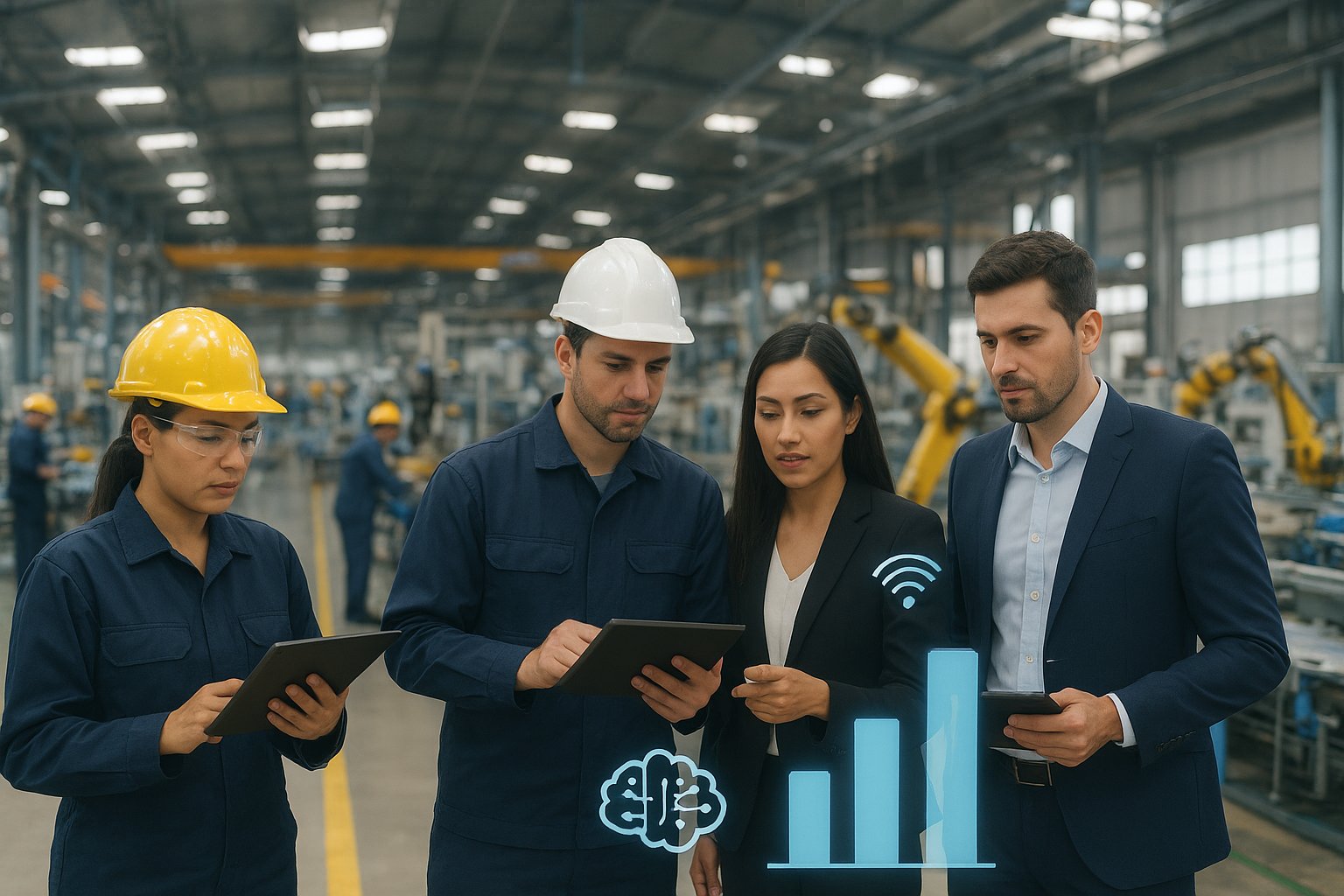
Future trends in supplier quality engineering Mexico: AI, IoT & Beyond
Artificial intelligence, IoT, and advanced digital systems are changing future trends supplier quality engineering Mexico. These technologies enable faster problem detection, predictive quality control, and stronger supplier collaboration. Manufacturers gain real-time visibility across the supply chain, while AI models anticipate risks before they escalate. The result is improved quality, reduced costs, and global competitiveness. Companies that embrace these future trends today will secure long-term resilience in a demanding manufacturing landscape.
Emerging technologies shaping supplier quality in Mexico
Mexican manufacturing is moving away from manual inspections and traditional auditing. Instead, companies now integrate connected sensors, smart machines, and AI-driven analytics into supplier operations.
These innovations provide three major benefits:
- Data precision: IoT sensors capture exact process metrics.
- Predictive power: AI forecasts potential defects before they occur.
- Automated assurance: Systems make real-time corrections without waiting for human intervention.
This transformation reflects a broader shift to Industry 4.0, where digital tools drive both efficiency and quality.
Why AI and IoT matter for supplier quality
AI and IoT are no longer optional in supplier quality—they are strategic necessities.
- Early issue detection: IoT-enabled machines flag problems instantly, preventing delays.
- Predictive insight: AI algorithms analyze production data to identify hidden risks.
- Smart automation: Automated feedback loops correct deviations immediately.
- Scalable systems: Cloud platforms make solutions adaptable to small and large suppliers.
These tools support nearshoring trends, where North American companies seek faster, more reliable Mexican suppliers to strengthen supply chain resilience.
Key applications transforming quality engineering
Predictive quality control
AI models forecast when machines or suppliers might produce defective parts, allowing teams to fix issues proactively.
Smart sensor networks
IoT devices measure temperature, vibration, and pressure across supplier lines. Data ensures that environmental factors don’t compromise quality.
Digital twins
Digital twins create virtual replicas of supplier operations. Engineers test adjustments in a simulated environment before applying them in reality.
Future trends in supplier quality engineering Mexico
Machine vision and robotics now replace manual checks. These systems measure parts within seconds, increasing accuracy and consistency.
Blockchain traceability
Blockchain secures certifications, materials data, and production records. This builds trust and prevents fraudulent supplier claims.
Industry examples driving innovation in Mexico
Automotive sector
Mexico is a leading exporter of vehicles and parts. AI-powered quality systems monitor suppliers to ensure strict automotive standards are met. IoT-enabled predictive maintenance reduces downtime in stamping, welding, and assembly plants.
Aerospace industry
In aerospace, precision is critical. Real-time IoT monitoring ensures components meet strict tolerance requirements. Blockchain technology secures compliance records for certifications demanded by global aerospace regulators.
Electronics manufacturing
Electronics plants in Mexico use smart cameras and AI-driven defect detection to maintain micro-level quality. Digital twins simulate production scenarios to avoid costly errors.
Pharmaceutical and medical devices
IoT-enabled cold chain monitoring ensures drug and medical device shipments remain within strict temperature ranges. AI predicts supply disruptions and maintains compliance with international health standards.
How Mexico’s manufacturing landscape supports Future trends in supplier quality engineering Mexico
Mexico’s role as a nearshoring hub has accelerated digital adoption. Its proximity to the United States, combined with trade agreements like USMCA, drives demand for quality and reliability.
Smart factories are emerging in industrial clusters across Nuevo León, Querétaro, and Baja California. Companies are investing heavily in digital infrastructure, training, and advanced systems to align with international supplier expectations.
Future trends in supplier quality engineering Mexico
High initial costs
IoT and AI adoption require upfront investment in sensors, cloud systems, and skilled personnel.
Solution: Start with pilot programs and expand gradually.
Skills gap
Many suppliers lack staff trained in AI and advanced analytics.
Solution: Partner with training centers and leverage collaborative industry programs.
Data security risks
Connected systems raise cybersecurity concerns.
Solution: Adopt strong encryption, access control, and blockchain-based data integrity.
Future trends in supplier quality engineering Mexico
Older equipment may not easily connect to IoT.
Solution: Retrofit machines with smart sensors to bridge the gap.
Practical steps for companies in Mexico
- Pilot intelligently – Start small with one supplier line or process.
- Invest in centralized data – Use cloud platforms to store and analyze supplier metrics.
- Automate quality gates – AI-driven inspections stop bad parts before they spread.
- Adopt digital twins – Simulate supplier process changes before rollout.
- Scale gradually – Expand successful solutions across the supplier base.
Strengthening supplier relationships with technology
IoT and AI create transparency across the supply chain. Suppliers and buyers share real-time dashboards, reducing disputes and building trust for future trends in supplier quality engineering in Mexico. Instead of reacting to problems, suppliers demonstrate compliance proactively.
For companies seeking expert guidance in this transition, Supplier Quality Engineering in Mexico offers advanced solutions that integrate digital systems with proven quality practices.
Regulatory and compliance perspective
Global buyers expect Mexican suppliers to meet international standards like ISO 9001, IATF 16949 (automotive), and AS9100 (aerospace). IoT and AI help suppliers comply by providing automated recordkeeping, digital traceability, and audit-ready data. These systems not only satisfy regulations but also reduce the burden of manual reporting.
Future outlook: AI, IoT, and beyond 2030
The future of supplier quality engineering in Mexico will move beyond monitoring into full autonomy. AI will not just predict defects but also decide corrective actions automatically. IoT devices will become more advanced, with self-healing networks and edge computing.
Emerging trends include:
- 5G-enabled supply chains for ultra-fast data transmission.
- Augmented reality (AR) for remote quality inspections.
- Sustainability-driven IoT to reduce waste and optimize energy usage.
- AI-driven supplier risk scoring for proactive sourcing decisions.
By 2030, supplier quality will rely less on audits and more on live, automated, and predictive intelligence.
Frequently Asked Questions (FAQs)
- How does AI boost supplier quality in Mexico?
AI analyzes data patterns to predict defects, enabling preventive action and reducing downtime. - Can small Mexican suppliers adopt AI and IoT affordably?
Yes. Affordable sensors and cloud-based AI tools allow gradual adoption without overwhelming budgets. - Which sectors benefit most from these trends?
Automotive, aerospace, electronics, and pharmaceuticals benefit most due to strict quality requirements. - What role do digital twins play in quality assurance?
They simulate supplier processes, letting companies test changes safely before implementing them. - Is blockchain necessary for supplier traceability?
While not mandatory, it secures records and ensures trust across global supply chains. - How do smart technologies lower overall quality costs?
They prevent defects early, cutting waste, rework, warranty claims, and compliance risks.
Conclusion
AI, IoT, and advanced digital systems are redefining supplier quality engineering in Mexico. These tools provide real-time visibility, predictive insights, and automated corrections. Industries from automotive to pharmaceuticals are already reaping the benefits.
The future will bring even more advanced capabilities—from AI-driven risk scoring to fully autonomous quality systems. Companies that act now will position themselves as leaders in resilient, globally trusted supply chains.