Keeping your engine oil at the correct level is one of the simplest yet most important parts of routine car maintenance. Whether you drive a petrol hatchback, a diesel SUV, or a hybrid, every engine relies on the right amount of oil to run smoothly.
Too little oil can lead to serious internal damage, while too much can create pressure and cause leaks, smoke, or overheating.
Yet many UK drivers still feel unsure about how much oil their car actually needs, how to check it properly, or when a refill becomes necessary. Understanding your car’s engine oil capacity not only helps you avoid expensive repairs but also ensures better fuel efficiency and longer engine life.
This guide explains everything you need to know from checking levels to topping up safely so you can protect your engine and avoid unnecessary headaches.
Why Engine Oil Capacity Matters
Every engine is built with a specific oil capacity, usually ranging from 3 to 6 litres, depending on size and design. This amount ensures that the engine is properly lubricated, cooled, and protected from friction. When oil levels fall below the recommended range, metal components grind against each other and wear prematurely.
Low oil also affects the oil pump’s ability to circulate lubrication, meaning the engine can overheat or completely seize a repair that often costs more than the vehicle is worth.
On the other hand, overfilling your engine with oil is just as harmful. Excess oil foams as it churns inside the crankcase, losing its ability to lubricate and causing pressure build-up that leads to blown seals or gasket leaks.
In short, correct engine oil levels keep your engine healthy, efficient, and long-lasting.
How to Check Your Car’s Engine Oil Level
Checking your oil only takes a few minutes and saves you from costly problems later. Here’s the simplest, most accurate method:
1. Park on level ground
Your reading will be incorrect if the car is parked on a slope. Let the engine cool for at least 10 minutes if it is running.
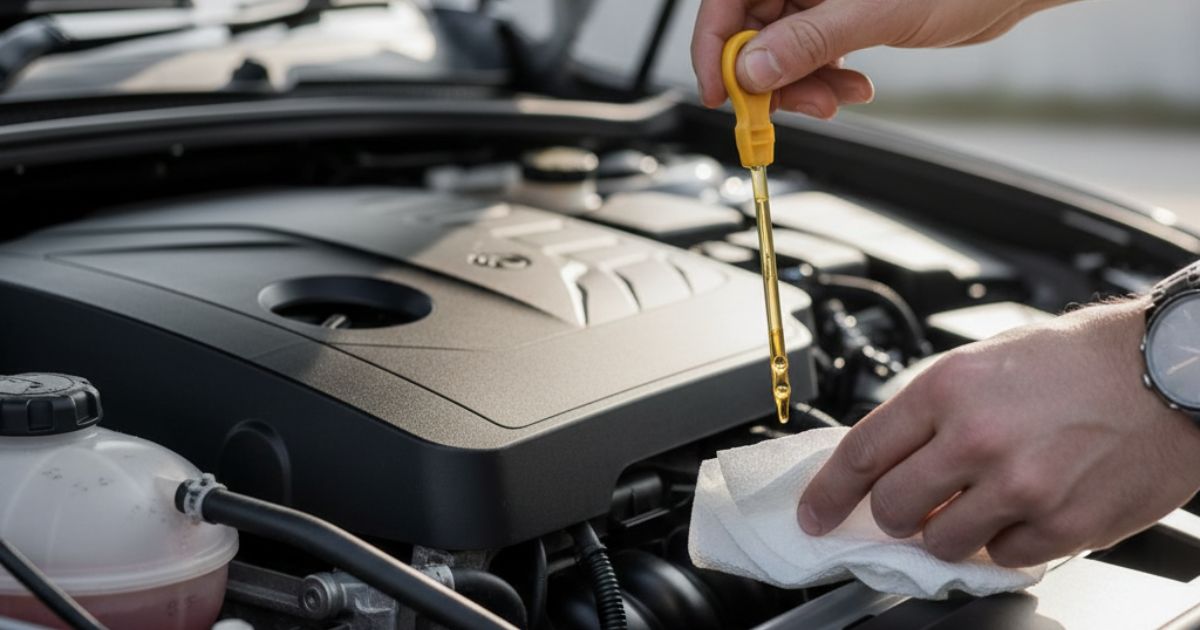
2. Locate the dipstick
Most cars have a brightly coloured dipstick handle, usually yellow or orange near the engine.
3. Wipe the dipstick clean
Remove it, wipe it with a clean cloth, then insert it fully again.
4. Check the oil level
Pull it out and look for the minimum and maximum markings. The oil should sit somewhere between these lines.
- If it’s at or below the minimum mark, your engine needs oil immediately.
- If it’s above the maximum line, the engine may already be overfilled.
5. Look at oil condition
Healthy oil should be amber or dark golden.
Thick, black, gritty oil means it’s time for a change.
Checking your oil every two to four weeks is a good habit, especially if your car is older, used for daily commuting, or consumes oil more quickly.
How to Know Your Car’s Oil Capacity
Every vehicle has a different engine oil capacity. You can find yours in:
- The owner’s manual
- Manufacturer service book
- Engine bay labels (for some cars)
- The manufacturer’s website
- An online registration lookup tool
For example:
- A small petrol hatchback may need 3.5 litres
- A diesel estate may require 5–6 litres
- Larger engines, turbo engines, and hybrids vary widely
Never guess the amount. Always check the exact figure to avoid overfilling.
How to Refill Engine Oil Safely
Topping up your oil is straightforward, but it must be done carefully.
1. Choose the correct oil grade
Modern engines require specific grades such as 5W-30, 0W-20, or 10W-40, depending on manufacturer requirements. Using the wrong oil can reduce engine efficiency or cause long-term wear.
2. Pour oil gradually
Remove the oil filler cap and add oil in small amounts around 200–300 ml at a time.
3. Recheck the dipstick
After every small pour, wait a few seconds, then check the dipstick again. This prevents overfilling.
4. Stop once you reach the correct level
Make sure the oil sits just below the maximum line, not above it.
5. Run the engine briefly
After topping up, run the engine for 30–60 seconds so the oil circulates properly. Then recheck the level one final time.
Signs Your Car Is Low on Engine Oil
Even before checking the dipstick, your car will often give you hints. Common symptoms include:
- Oil warning light on the dashboard
- Burning smell from under the bonnet
- Engine knocking or ticking sounds
- Poor fuel efficiency
- Rough idling or sluggish acceleration
If any of these occur, stop driving until you check the oil level. Driving with insufficient oil can destroy an engine within minutes.
Can You Drive When the Oil Light Is On?
The short answer: no.
The oil warning light usually means pressure is too low for the engine to run safely. Continuing to drive can lead to complete engine failure.
If the light comes on:
- Pull over safely.
- Check the oil level immediately.
- Add oil if low.
- If the level is normal, call for assistance there may be a leak or pressure issue.
Common Reasons Why Oil Levels Drop
Oil levels don’t fall for no reason. Some common causes include:
- Worn piston rings or valve seals
- Oil leaks from the sump, filter, or gasket
- High mileage consumption
- Turbocharged engines using more oil
- Driving short trips that don’t allow proper circulation
If you find yourself topping up frequently, it’s worth visiting a trusted car repair garage for a proper inspection.
How to Avoid Engine Damage from Incorrect Oil Levels
You can protect your engine with a few simple habits:
- Check oil regularly at least twice a month
- Change oil and filter according to manufacturer schedule
- Use the correct oil grade
- Fix leaks early
- Avoid harsh driving when your engine is cold
Small steps prevent big, expensive problems.
Final Thoughts
Understanding your car’s engine oil capacity, learning how to check levels properly, and knowing when to refill are essential parts of responsible car ownership.
With the right maintenance habits, whether you do it yourself or get guidance from a trusted local auto garage, your engine stays smoother, quieter, and far more reliable for years to come. This simple routine doesn’t just protect your car, it protects your wallet, too.
For more helpful guides and expert tips on car maintenance, Postings Hub blog regularly shares practical advice that every driver can rely on.