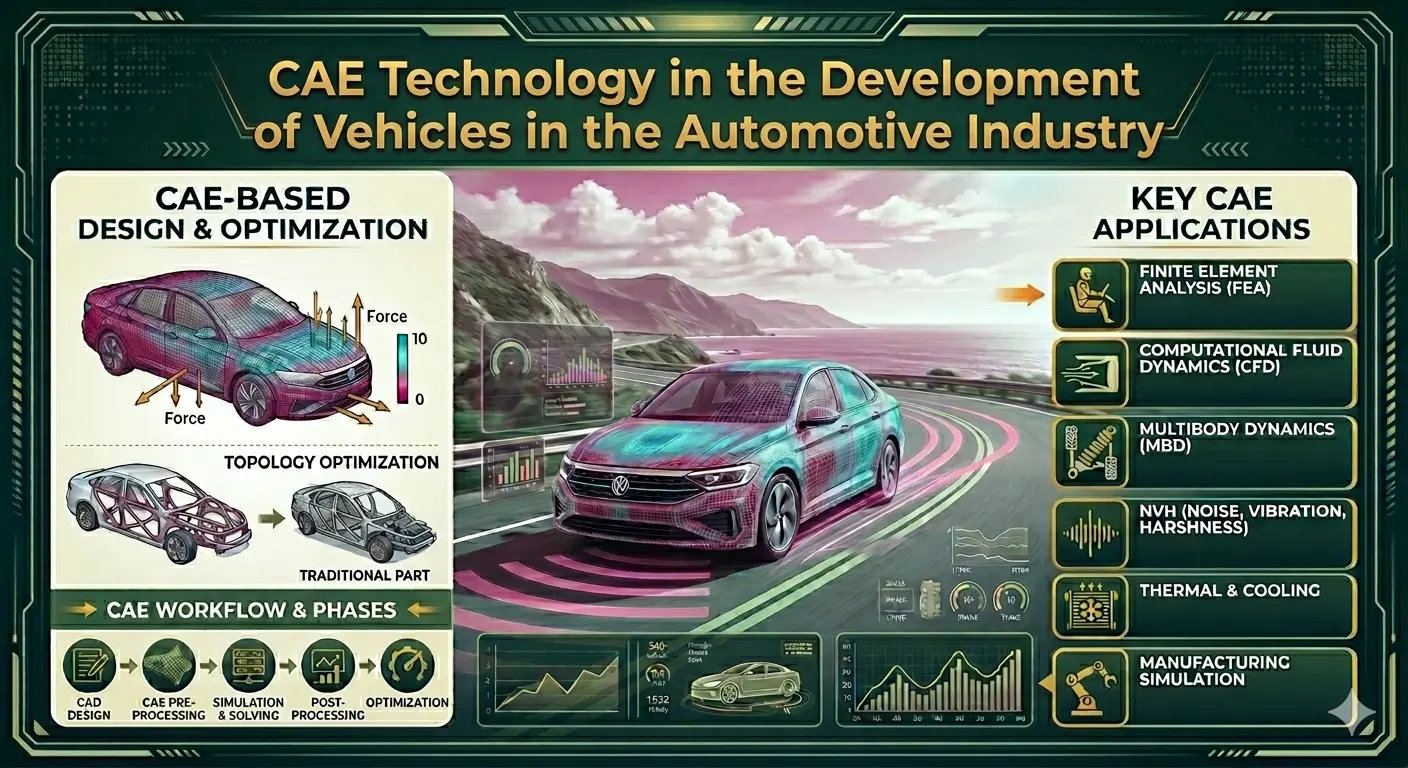
The automotive industry has evolved rapidly with the adoption of advanced digital technologies that enhance vehicle design, testing, and manufacturing. One of the most transformative innovations in modern automotive engineering is Computer-Aided Engineering(CAE). This powerful technology allows engineers to simulate, analyze, and optimize vehicle performance using advanced automotive design software before building physical prototypes.
CAE engineering, computer-aided engineering drawing tools, and advanced simulation platforms, manufacturers can significantly reduce development time while improving vehicle safety, efficiency, and reliability. From crash testing simulations to electric vehicle technology development, CAE has become a critical part of modern automotive innovation.
Understanding Computer-Aided Engineering in Automotive Development
Computer-aided engineering refers to the use of specialized CAE software and automotive design software to analyze engineering designs and simulate real-world conditions. These simulations help engineers evaluate how a vehicle or component will behave under different situations, such as impact forces, thermal stress, vibrations, and aerodynamic pressure.
In traditional automotive development, engineers relied heavily on physical prototypes for testing. However, with CAE technology, companies can now create digital models and computer-aided engineering drawings that allow for extensive testing in a virtual environment.
This digital approach enables engineers to:
- Analyze structural strength and durability
- Simulate crash scenarios and safety performance
- Evaluate aerodynamics and airflow
- Optimize electric vehicle components
- Improve vehicle dynamics and handling
Role of CAE Engineering in the Automotive Design Process
The automotive development cycle consists of several stages, including concept design, engineering analysis, testing, and production. CAE engineering supports each stage of this process, making vehicle development more efficient and precise.
Concept Design and Digital Modeling
At the initial stage, engineers use auto design programs and automotive design software to create digital vehicle models. These models include detailed representations of vehicle components such as the chassis, suspension system, powertrain, and body structure.
Using computer-aided engineering drawing tools, engineers can visualize complex vehicle structures and make adjustments to improve design efficiency.
Simulation and Performance Analysis
Once the vehicle model is developed, engineers run simulations using advanced CAE software to evaluate how the vehicle will perform under real-world conditions.
These simulations help analyze:
- Structural strength under heavy loads
- Aerodynamic efficiency
- Heat distribution across components
- Vibration and noise levels
- Vehicle stability during high-speed driving
CAE Software for Crash Testing and Safety Analysis
Vehicle safety is a critical aspect of automotive engineering. Car crash testing and safety simulations are among the most important applications of computer-aided engineering.
Instead of relying solely on physical crash tests, engineers use CAE software to simulate crash scenarios in a digital environment. These simulations allow manufacturers to study how vehicles respond during collisions.
Crash Testing Simulations
During crash testing simulations, engineers analyze:
- Structural deformation of the vehicle body
- Energy absorption during impact
- Passenger safety performance
- Airbag deployment timing
- Seatbelt effectiveness
Testing Crash Test Vehicles
Once digital simulations are complete, crash test vehicles are built to validate the simulation results.
CAE in Electric Vehicle Technology Development
With the rapid growth of electric vehicle technology, CAE software has become essential in designing electric vehicle systems.
- Electric vehicle motors
- EV battery systems
- Power electronics
- Thermal management systems
Electric Vehicle Motor Design
The electric vehicle motor is one of the most critical components in EV performance. Engineers use CAE tools to simulate:
- Magnetic field behavior
- Motor efficiency
- Heat generation
- Torque output
EV Battery Technology Simulation
EV battery technology plays a key role in determining vehicle range, safety, and charging performance. CAE software allows engineers to simulate battery behavior under different conditions.
Simulations analyze:
- Battery temperature distribution
- Thermal runaway risks
- Charging and discharging efficiency
- Battery pack structural strength
Automotive Design Software and Auto Design Programs
Modern automotive design software integrates CAD (Computer-Aided Design) and CAE technologies to create a seamless engineering workflow.
Popular auto design programs allow engineers to:
- Develop detailed vehicle models
- Create precise engineering drawings
- Perform structural simulations
- Analyze component interactions
CAE Technology in Autonomous Driving Development
Another area where CAE technology is making a significant impact is autonomous vehicle development. As vehicles move toward higher autonomous driving levels, simulation technology becomes increasingly important.
- Traffic scenarios
- Pedestrian interactions
- Weather conditions
- Sensor performance evaluation
- Vehicle response to obstacles
Benefits of CAE Technology in Automotive Engineering
The implementation of computer-aided engineering technology provides several advantages to automotive manufacturers.
Faster Vehicle Development
CAE simulations allow engineers to test multiple design variations quickly, accelerating the development process.
Improved Safety Standards
Advanced crash simulations help design vehicles that meet strict global safety regulations.
Better Vehicle Performance
Through aerodynamic analysis, structural optimization, and system simulations, engineers can enhance vehicle efficiency and driving performance.
Support for Electric and Autonomous Vehicles
CAE plays a key role in the development of electric vehicle motors, EV battery technology, and autonomous driving systems.
Future of CAE Engineering in the Automotive Industry
As the automotive industry continues to innovate, CAE technology is becoming more advanced with the integration of artificial intelligence, cloud computing, and digital twin technology.
Future developments in CAE engineering may include:
- AI-driven design optimization
- Real-time vehicle simulations using digital twins
- Advanced autonomous driving simulations
- Predictive maintenance modeling
Conclusion
Computer-Aided Engineering (CAE) has revolutionized the automotive industry by enabling manufacturers to design, simulate, and optimize vehicles in a virtual environment. From automotive design software and auto design programs to crash testing simulations and electric vehicle development, CAE technology plays a vital role in modern vehicle engineering.
By integrating computer-aided engineering drawings, advanced CAE software, and simulation tools, automotive companies can create vehicles that meet the highest standards of performance, safety, and efficiency.